[Published: Tuesday November 03 2026]
 Balfour Declaration at 109: nightmare and suffering continues for Gaza
ISRAELI OCCUPIED GAZA, 03 Nov. - (ANA) - For Palestinians in the Gaza Strip, the 109th anniversary of the the UK's Balfour Declaration is a reminder of the beginning of their historical Nakba, or catastrophe, which paved the way for Israel's establishment by forcing out hundreds of thousands of Palestinians in 1948, and decades of occupation, wars, and forced displacement.
Many Palestinians see the ongoing Israeli genocidal war on Gaza as another chapter in a tragedy that has spanned generations.
Issued on 2 November 1917, the declaration gave the British goverment's support of Zionist colonalisation in Palestine without consulting its indigenous inhabitants.
It marked the beginning of a historical injustice for Palestinians, with the consequences remaining part of their daily lives.
A tragedy inherited across generations
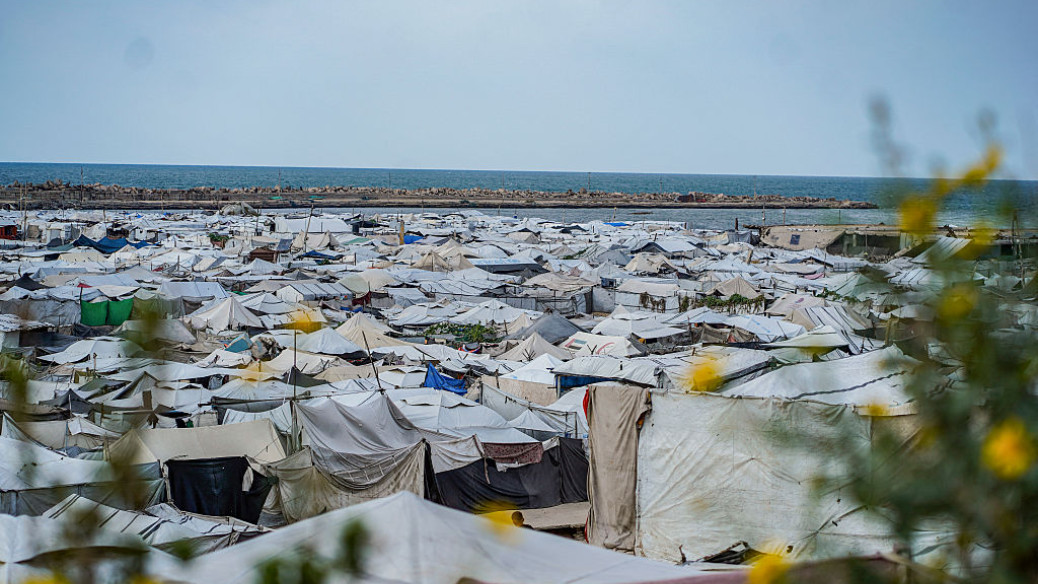
Ibrahim Abu Shawish, 85, a resident of al-Nuseirat refugee camp in central Gaza, lived through the 1948 Nakba and has witnessed decades of displacement, occupation and successive wars.
He describes the Balfour Declaration as the starting point of Palestinian suffering, arguing that today's tragedy is a continuation of the dispossession that began more than a century ago.
"Britain gave away our land to people who had no right to it, and Palestinians have been paying the price ever since. We lived through the Nakba in 1948, hoping our suffering would end, but instead spent our lives moving from one war to another," he told The New Arab. "Today, we see our children and grandchildren experiencing the same tragedy."
Noaman Nassar, 69, was born in Gaza to a refugee family. He told TNA that he has never known a life free from the consequences of the Nakba.
"I did not witness the original Nakba, but I was born out of it. My family became refugees because of the Balfour Declaration and the decisions that paved the way for Israel's establishment on Palestinian land. I did not choose to be born a refugee; I inherited this tragedy from my ancestors," he said.
He added that seeing another generation displaced in Gaza confirms that the roots of the Palestinian tragedy remain unresolved.
In Khan Younis, southern Gaza, 35-year-old Maryam Abu Rjeila has experienced another devastating chapter of that suffering.
She lost her husband and four children during Israel's genocidal war on Gaza.
"Our grandparents lost their homes and land, and today we are losing our homes, children and husbands. What is the difference between the Nakba they experienced and what we are living through? The years have passed, but the tragedy remains the same," she told TNA.
"I never imagined I would lose my husband and all four of my children. All I want is for Palestinians to live in their own homes, surrounded by their families, without fearing war, displacement or death," he said.
Ongoing Nakba
Gaza-based political analyst Ahed Ferwana describes the Balfour Declaration as the starting point of the modern Palestinian tragedy, stressing that Britain's endorsement of the Zionist colonial project came at the expense of Palestinians' right to self-determination.
He told TNA that the declaration set in motion developments during the British Mandate that eventually contributed to the 1948 Nakba, Israel's forced establishment and the displacement of hundreds of thousands of Palestinians.
He noted that the Nakba did not end in 1948 but continued through occupation, settlement expansion, land confiscation and repeated displacement until the present.
He considers Israel's current genocidal war on Gaza one of the bloodiest chapters in this history, arguing that Palestinians continue to pay the price of historical decisions through successive wars, blockade and destruction.
He said that Britain's responsibility cannot be separated from the broader international responsibility for the continuation of the Palestinian tragedy.
Any genuine solution, he says, must recognise Palestinian national rights, particularly self-determination, and end the occupation.
International failure to address the roots of the conflict
Another Gaza-based political analyst, Akram Atallah, also considers the Balfour Declaration the beginning of the political developments that culminated in the Nakba.
However, he argued that the tragedy has persisted because the international community has failed to deliver justice or address the causes of Palestinian displacement.
He told TNA that Palestinians have inherited not only memories of the Nakba but also its political, geographical and social consequences. Generations have grown up in refugee camps, under occupation, or amid Gaza's blockade and recurring wars.
He said the current war has revived fundamental questions about the international community's failure to resolve a conflict that has lasted more than a century.
"The danger is that this tragedy is being passed from one generation to another. Palestinians are no longer speaking only about reclaiming the land their ancestors lost, but also about protecting their families, homes and basic right to life," he added.
Atallah argued that ending the war or reaching temporary ceasefire agreements is insufficient without addressing the roots of the conflict, recognising Palestinian national rights and ending the Israeli occupation. - (ANA) -
AB/ANA/03 November 2026 - - -
|