[Published: Sunday November 22 2026]
 How Israel is making southern Lebanon unliveable
By Alex Martin Astley
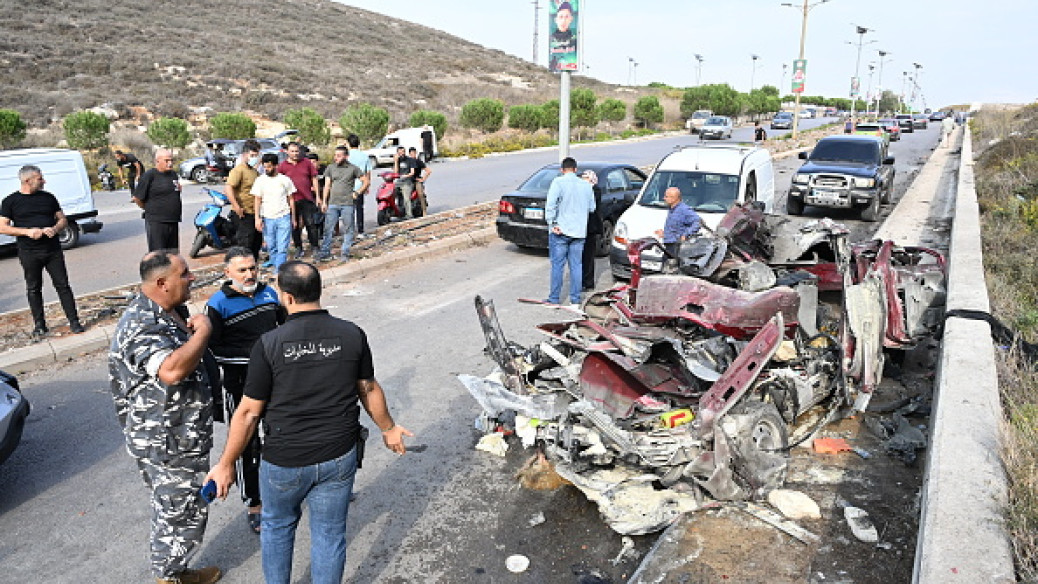
BEIRUT, 22 Nov. - (ANA) - As well as the devastating human cost in southern Lebanon, Israel’s occupation has levelled entire villages and wrought havoc on the natural environment, which analysts say is altering this landscape for years to come and making it increasingly uninhabitable.
Around 50 border villages in southern Lebanon have been destroyed or razed to the ground, with much of the damage inflicted during two ceasefire periods beginning in November 2024 and April 2026.
Groups like Human Rights Watch and Amnesty International have repeatedly condemned the systematic destruction of civilian infrastructure outside of active combat as a violation of humanitarian law.
“The long-term impact of this destruction will be devastating, particularly because what we are witnessing is not only the destruction of individual buildings, but the dismantling of entire villages and their surrounding agricultural lands,” Yara Abdelkhalek and Rayan Alaeddine, researchers at Public Works Studio, a Beirut-based research and design studio, told The New Arab.
One frontline village which has been almost entirely destroyed is Kfar Kila. Over the past three years, Kfar Kila has been gradually erased through aerial bombardment, ground detonations, and bulldozing. Attacks with white phosphorus munitions have burnt and poisoned its agricultural areas, and many of the village’s olive trees have been uprooted.
As part of a research project dedicated to the village, Public Works Studio has mapped and documented much of this devastation.
“These maps [of Kfar Kila] are not only documentation tools. They are also attempts to preserve the memory of what the town was before the war,” Abdelkhalek and Alaeddine told The New Arab.
“Kfar Kila was not simply a border village. It functioned as a living ecological, agricultural, and social system, where agriculture formed one of the central foundations of both the local economy and the town’s identity.”
The studio has also documented “almost daily” detonations over the past three months. Some of these have destroyed civilian infrastructure, including water wells, and a school in the village of Mansouri in September, and another school in Houla in October.
Israeli forces continue to occupy the area south of the “yellow line” - a 10km-deep ribbon of territory along the Israeli-Lebanese border, where they continue to demolish homes despite a framework agreement signed in June aimed at securing Israel’s phased withdrawal.
The war in Lebanon began in October 2023, when the Lebanese militant group Hezbollah fired rockets and artillery into northern Israel in solidarity with Hamas following the group’s 7 October attacks on Israel.
Since then, Israel has killed around 9,000 people in Lebanon, including women, children, and health workers, according to Lebanon’s health ministry.
During Israel’s second escalation in March 2026, blanket Israeli evacuation orders and intense bombardment forced 1.2 million people - nearly one-fifth of Lebanon’s population - to flee their homes within weeks.
While attacks have since subsided, 300,000 people remained internally displaced at the end of September, including at least 22,000 living in collective shelters. Many of them lived behind Israel’s “yellow line” and are prevented from returning to their land.
The natural environment is another victim of Israel’s onslaught on south Lebanon.
More than 16,000 hectares of agricultural land, woodlands and forests, primarily in the south, have been burned by Israeli bombardments and phosphorus use since October 2023, according to Lebanese Environment Minister Tamara al-Zein.
“It is a kind of annihilation, a place erasure,” Hisham Younes, founder of the environmental organisation Green Southerners, told The New Arab.
“Sometimes we question whether ecocide is still an adequate term to describe what we are witnessing, because the destruction goes far beyond the degradation of ecosystems themselves.”
It will take years before these ecosystems can recover, with some of the most lasting damage caused by toxic heavy metals and phosphorus from Israeli munitions seeping into the soil and water systems.
Of particular concern is the contamination of the Litani River Basin, which encompasses hundreds of villages and irrigates thousands of hectares of agricultural land.
In some border areas, Green Southerners documented the spraying of glyphosate, a herbicide that kills almost any type of green plant it touches.
As the south is a region heavily dependent on agriculture, many farmers, if they can ever return, will find themselves cut off from their livelihoods.
In October, in some southern villages such as Kfar Chouba and Yater, Israeli forces actively prevented farmers from harvesting their olive trees by denying them access and dropping sound bombs.
The ecological disaster in the south also extends to the wildlife, like the locally endangered Syrian rock hyrax. The small furry mammal has lost some of its natural shelters to massive detonations. Other mammal and insect life is also of major concern, but with research teams unable to gain access, it is impossible to assess the extent of the damage to the ecosystem.
Younes highlighted, however, that the environmental costs would also affect Israel’s side of the border.
“Nature does not recognise international boundaries,” he said. “And we are talking about an old forest ecosystem that has been cleared. You cannot simply replant trees or allow vegetation to regenerate and expect to recover the same ecosystem that existed before.”
Analysts say that the systematic levelling of the “yellow line” area in southern Lebanon appears to form part of a broader Israeli military strategy deployed in neighbouring countries it is occupying.
Similar “buffer zones”, established via land clearing and forced displacement, can be seen in Gaza and Syria’s southern Quneitra province.
Israel’s last occupation of Lebanon, which lasted from 1982 to 2000, saw a massive troop deployment that was embedded heavily in urban areas.
This time, however, Israel is instead exerting control through widespread destruction in what Lebanon’s prime minister, Nawaf Salam, has called a “scorched-earth policy and collective punishment.”
The Israeli military says it is targeting Hezbollah infrastructure in southern Lebanon, and that it will not withdraw from the territory it occupies until the militant group is disarmed.
“It appears Israeli thinking on security and issues of peace has changed … It doesn’t really believe in peace agreements with respect to neighbouring countries such as Lebanon and Syria,” Michael Young, a senior editor at the Carnegie Endowment’s Middle East Center in Beirut, told The New Arab.
While the Lebanese army has been tasked with disarming Hezbollah, almost no one expects this will be attempted fully since it would risk reigniting Lebanon’s 15-year civil war. And so, Israel is changing the situation in the south on its own terms.
“It's imposing unilaterally a new situation in South Lebanon that clearly implies that for a long time, there will be either an open-ended Israeli occupation, or if there is some deal in the future, that large areas of southern Lebanon will remain uninhabitable,” Young added.
The use of drones, armed robots, and AI also allows Israel to patrol the border area without massing troops that could be vulnerable to attacks. Meanwhile, security cameras, monitoring systems, and new military roads are reshaping a rural landscape that is centuries old.
Even if Israeli forces were to fully withdraw, rebuilding the south will require substantial financial resources and long-term investment that are, for now, not likely to be released by international donors until political and security demands are met.
The cost of the conflict in south Lebanon alone is estimated at $1.38 billion in direct building damage, according to a joint damage assessment by UNDP and Lebanon’s National Council for Scientific Research (CNRS-L).
And yet, some aspects of life in southern Lebanon may never be the same.
“What was being targeted was not only the built fabric but the relationship of the people to their lands and their potential of returning to their villages,” said Abdelkhalek and Alaeddine.
“The long-term impact is therefore not only whether people will have houses to return to, but whether the social, economic, cultural, and environmental foundations of village life can be restored.”
Author
Alex Martin Astley is a freelance journalist based in Beirut, covering conflict, foreign policy, and social justice issues. - (ANA) -
AB/ANA/22 November 2026 - - -
|